
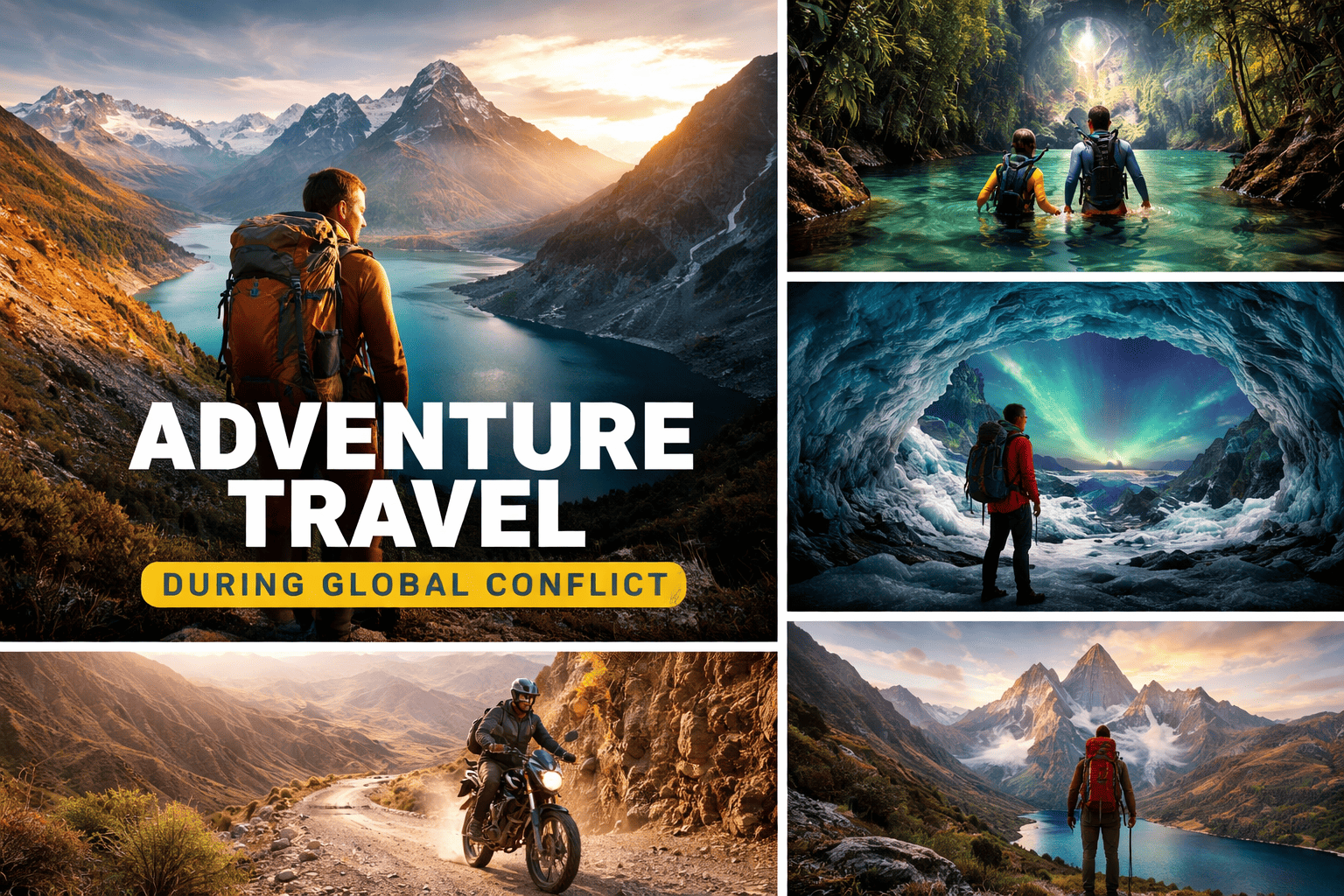
🌍 Adventure War Conditions
Adventure doesn’t stop during geopolitical crises—it evolves. The modern traveler must shift from risk-heavy exploration to strategic, informed adventure.
This is your guide to chasing thrill without stepping into danger zones.
🧭 1. Redefining “Adventure” in War-Affected Areas
Traditionally, adventure meant remote deserts, politically complex regions, or off-the-grid expeditions. Today, that mindset needs updating.
👉 New definition of adventure:
- Remote but politically stable
- Logistically challenging but safe
- Culturally immersive without conflict exposure
Think:
- Volcano trekking instead of war-zone deserts
- Arctic expeditions instead of unstable borders
- Jungle exploration in stable countries
🌋 2. High-Adrenaline Destinations (Safe Alternatives)
Here are thrilling destinations replacing traditional high-risk regions:
🇯🇵 Japan – Controlled Wilderness + Extreme Nature
- Japan
- Skiing in Hokkaido
- Climbing Mount Fuji
- Exploring remote alpine villages
👉 Why it works: Ultra-safe, world-class infrastructure, yet deeply adventurous.
🇨🇱 Chile – Extreme Landscapes
- Chile
- Atacama Desert (Mars-like terrain)
- Patagonia trekking
- Glacier hiking
👉 Replaces: Middle Eastern desert expeditions
🇳🇴 Norway – Arctic Adventure
- Norway
- Northern Lights chasing
- Ice climbing
- Fjord kayaking
👉 Replaces: Remote high-risk cold regions
🇻🇳 Vietnam – Jungle + Cave Exploration
- Vietnam
- Trekking in Sapa
- Exploring Son Doong Cave
- Motorbike adventures across mountain passes
🇲🇽 Mexico – Diverse Adventure Hub
- Mexico
- Cenote diving
- Volcano hiking
- Jungle ruins exploration
✈️ 3. The Rise of “Detour Adventure Travel”
With Middle Eastern airspace restricted, travelers are discovering new routes that are adventures themselves.
Example:
Instead of:
- Europe → Dubai → Asia ❌
Try:
- Europe → Kazakhstan → Southeast Asia ✅
- Europe → Japan → Pacific routes ✅
👉 These detours often unlock:
- New cultures
- Unique stopovers
- Less crowded experiences
🏕️ 4. Micro-Adventures: The New Trend
When global travel becomes unpredictable, local and regional adventure explodes in popularity.
If you’re in or near:
- Qatar
Try:
- Desert camping (safe zones only)
- Inland dune expeditions
- Coastal kayaking
👉 Key idea: Short, controlled bursts of adventure instead of long risky trips.
🧠 5. The Psychology of Adventure Right Now
Adventure travelers fall into a unique category:
- Higher risk tolerance
- Strong curiosity
- Desire for rare experiences
⚠️ But current reality demands:
- Calculated risk (not impulsive risk)
- Situational awareness
- Exit strategies
👉 Smart adventurers ask:
- “Can I leave quickly if needed?”
- “Is infrastructure reliable?”
- “Is this politically stable?”
🧰 6. Essential Gear for Conflict-Era Travel
Your packing list should evolve:
🎒 Must-Haves
- Portable power bank (critical)
- Offline maps (e.g., Maps.me)
- VPN (for restricted networks)
- Local SIM + backup SIM
- Emergency cash (USD preferred)
🧭 Pro Gear
- Satellite communicator (for remote expeditions)
- Travel insurance (check exclusions carefully)
🚨 7. Adventure Travel Red Flags (Avoid at All Costs)

Even thrill-seekers should draw hard lines:
❌ Border regions near:
- Iran
- Iraq
❌ “Dark tourism” in active conflict zones
❌ DIY crossings without embassy coordination
❌ Traveling without evacuation options
👉 Real adventure ≠ unnecessary danger
🌍 8. Emerging Adventure Trends (2026 and Beyond)
Because of global instability, new travel patterns are forming:
🔥 Trending Now:
- Arctic expeditions
- Remote island travel
- Overland journeys in stable regions
- Digital nomad + adventure hybrid trips
🌐 Shift in mindset:
From:
“Go anywhere, anytime”
To:
“Go smart, go prepared, go where it’s safe—but still wild”
🛡️ Essential Safety Measures for Travelers in Conflict Zones
When traveling during periods of geopolitical instability, safety is no longer optional—it becomes your primary travel strategy. These measures are critical if you are currently in, or planning to travel near, affected regions.
📍 1. Mandatory Registration with Authorities
Before and during your trip, register with your government so they can locate and assist you in emergencies.
🌐 Key Programs:
- U.S. Department of State – STEP (Smart Traveler Enrollment Program)
- Ministry for Europe and Foreign Affairs – Fil d’Ariane
- UK Foreign, Commonwealth & Development Office – Travel Aware
✅ Why this matters:
- Receive real-time security alerts
- Get evacuation instructions
- Be included in emergency evacuation lists
👉 Pro Tip: Register every country on your itinerary, not just your final destination.
🎒 2. Build a Crisis-Ready Emergency Kit
In unstable environments, you must be ready to survive 48–72 hours without assistance.
🧰 Essential Items:
- Passport + printed copies
- Emergency cash (USD/EUR preferred)
- Portable charger / power bank
- First aid kit + personal medication
- Bottled water + energy bars
- Flashlight or headlamp
- Local SIM card + backup phone
👉 Optional but powerful:
- Portable water filter
- Compact emergency blanket
- Whistle (for signaling)
🗺️ 3. Contingency Planning (Your Exit Strategy)
Never assume airports will remain open. You need a Plan B, C, and D.
🚗 Key Planning Steps:
- Identify multiple exit routes (air + land)
- Map routes to nearby safer countries such as:
- Turkey
- Oman
- Pre-research:
- Border crossing requirements
- Visa-on-arrival options
- Embassy locations along the route
⚠️ Critical Rule:
Do NOT attempt border crossings without:
- Official guidance
- Embassy coordination
- Verified safe passage
📡 4. Stay Informed in Real Time
Information can save your life.
📲 Tools to Use:
- Government alert systems
- Local news channels
- Apps like Google Maps (offline mode)
🔔 What to monitor:
- Airspace closures
- Military activity zones
- Curfews and restrictions
👉 Check updates multiple times daily.
🏠 5. Shelter & Movement Strategy
If conflict escalates suddenly:
🛑 During Active Threats:
- Stay indoors
- Use interior rooms (bathroom, hallway)
- Avoid windows and glass
🚶 Movement Rules:
- Travel only during daylight
- Avoid:
- Military checkpoints
- Government buildings
- Crowded public areas
🧭 Final Thought
This era doesn’t end adventure—it filters out reckless travel and rewards those who adapt.
The smartest travelers in 2026 are:
- Flexible
- Informed
- Strategic
And they still experience some of the most incredible adventures on Earth—just in safer, smarter ways.